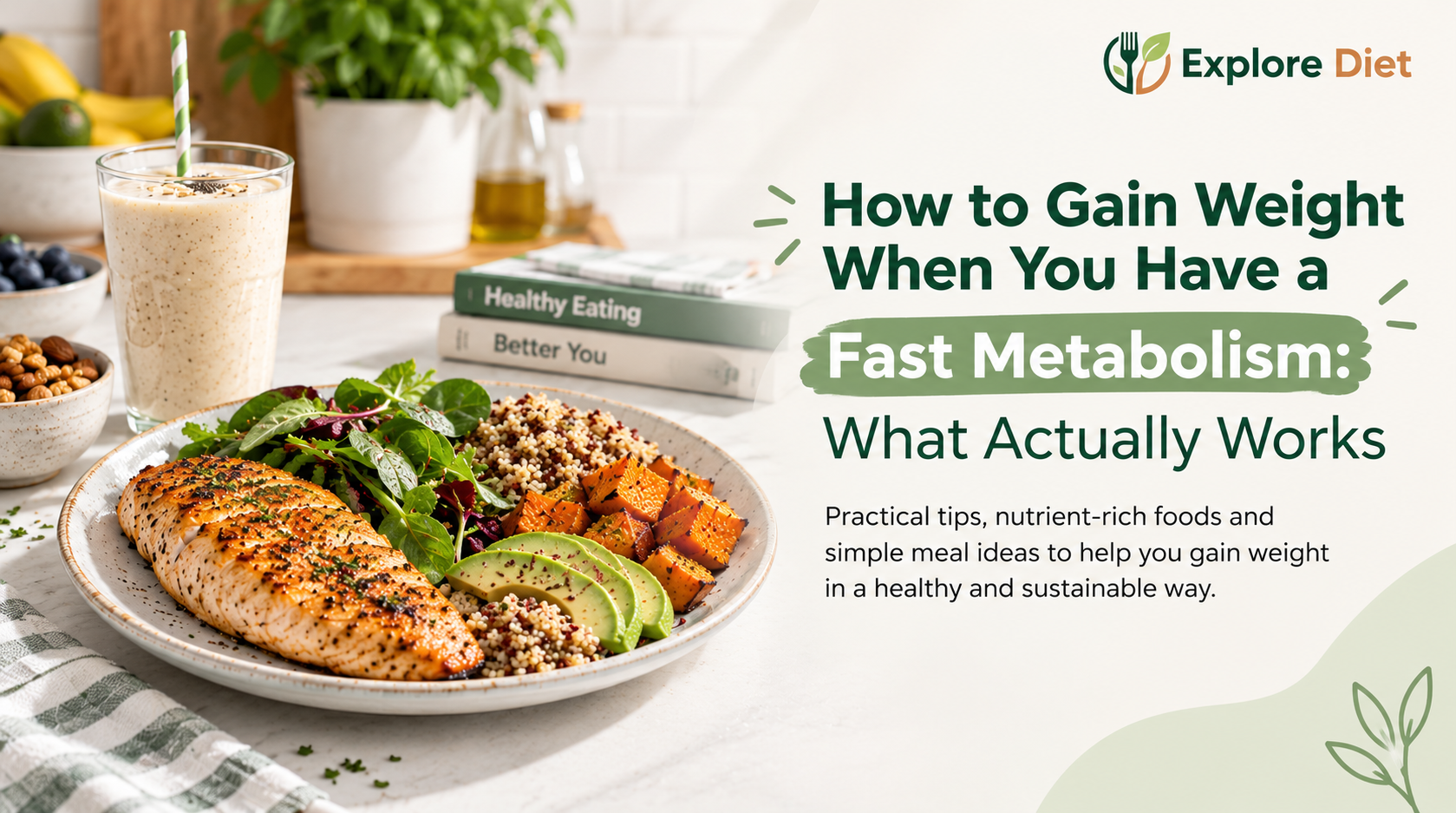
Eating three-course meal and still not gaining weight?
Frustrating isn’t it.
Gaining weight seems easy for some while other struggles due to fast metabolism.
You eat three proper meals, snack in between, and the scale barely moves. People tell you that you’re lucky, but it doesn’t feel like luck when your clothes hang loose and you can’t add a single pound.
Some people do find weight gain harder than others, and “fast metabolism” is the explanation most of them hear.
It can play a part, but it’s rarely the whole story. Your life is feels stuck on one question: how to gain weight with a fast metabolism .
The principle is simple. You need to intake more than the energy your body uses. If you’re losing weight without trying, or you’ve struggled to gain despite real effort, a medical check is worth having.
Gaining Weight with Fast Metabolism is Challenging
Yes, fast metabolism seems to be biggest roadblock. Let’s break down what’s actually getting in the way.
What does a fast metabolism actually mean?
Metabolism is the set of processes that keep your body running and turn food into energy. Your daily energy use comes from three main sources:
- The energy your body needs at rest for breathing, circulation and temperature control
- The energy you spend on movement: from walking to workouts
- The energy used to digest and absorb food
Two people of similar weight can burn noticeably different amounts of energy each day. That’s why a person can eat the same lunch as you and gain weight while you struggle.
Is a fast metabolism the only reason you stay thin?
Often it is not the case. There are several other things can be causing it.
- You may be eating less across a full day than you think.
- A very active lifestyle or a physically demanding job can raise your energy needs.
- A small appetite, or feeling full quickly, makes it hard to eat enough.
- Genetics and individual body type also regulates weight.
- There can be some medical conditions which makes it hard to gain weight.
Most people with difficulty gaining weight have a different mix of reasons not just one.
First, Figure Out Why You’re Not Gaining Weight
Before you change your diet, check for the obstacles and breakdown how to gain weight with a fast metabolism. Look for questions like.
Are you eating enough calories consistently?
Having a large portion at dinner time can make you feel like you have eaten a lot. But if you skip breakfast and have a light lunch, your weekly average may be lower than you’d guess. Gaining weight depends on the average, not on having occasional large meals.
Are your activity levels higher than you realize?
Daily walking, gym sessions, sports and a job on your feet all add up. If you’ve recently started training harder or picked up a more active routine, your old eating habits may no longer cover what you burn.
Do you get full before you’ve eaten enough?
If big plates put you off, try smaller, more frequent meals. Calorie-rich snacks and drinks between meals can fill the gap without the heavy, stuffed feeling.
Could something else be affecting your weight?
Persistent digestive symptoms, unexplained weight loss or other ongoing symptoms are good reasons to see a healthcare professional. That doesn’t mean everyone with a lower body weight has a medical problem.
Read more: 7 “Healthy” Foods That Are Secretly Making You Fat
How Many Calories Should You Eat to Gain Weight?
To gain and maintain healthy weight, you need to keep a check on your calories. Here is the practical core of the whole process.
-
Start with your current calorie intake
Start with a calorie count. Keep a track on everything you eat and drink, including snacks, and use an app or label information to estimate calories. Most people are surprised by what they find. You may notice skipped meals, long pauses between eating, or a diet built around low calories.
-
Create a modest calorie surplus
Gaining weight generally means consuming more energy than your body uses. For many adults, it’s important to add about 300 to 500 calories per day. It isn’t a rule for everyone. You need to figure out your body size, activity level, health and goals. A very active person may need more, and someone with a small appetite may need to eat more to gain weight.
What Should You Eat to Gain Weight With a Fast Metabolism?
The aim is food that carries a lot of energy and also supports your health, not food that’s merely high in calories.
Choose calorie-dense foods that also provide nutrients
These foods deliver plenty of energy in a small portion, which helps if you fill up fast:
- Nuts, seeds and peanut butter
- Avocado and olive oil
- Whole-milk yogurt, milk and cheese, where they suit you
- Oats, rice, pasta, potatoes and whole-grain bread
Include protein to support muscle growth
Protein matters if you want the weight you gain to include muscle. Good sources include eggs, chicken, fish and lean meat, plus Greek yogurt, cottage cheese and milk. Beans, lentils, tofu and other plant proteins work well too.
Protein does its best work inside an adequate overall diet, and it pairs especially well with resistance training if building muscle is your goal.
Make everyday meals more calorie-rich
You don’t need dramatically bigger portions. Small additions to meals you already eat go a long way:
- Add olive oil to pasta or vegetables.
- Stir nut butter into oatmeal or smoothies.
- Put cheese, avocado or hummus in sandwiches.
- Pair fruit with yogurt, nuts or nut butter.
Read more: 7 Fat-Burning Breakfasts That Keep You Full for Hours
7 Practical Ways to Eat More Without Feeling Uncomfortable
1. Eat smaller meals more often
Three meals plus two or three snacks suit many people better than a few large meals. Each sitting feels manageable, and the total adds up.
2. High calorie drinks between meal
Smoothies and milk-based drinks are an easy way to add energy. Just keep them as an addition. Drinks shouldn’t replace balanced meals.
3. Keep easy snacks within reach
Trail mix, yogurt, cheese and crackers, and peanut butter toast all work. If food is in your bag or on your desk, you’re far more likely to eat it.
4. Add calorie-rich ingredients
Small additions that are easy to repeat beat big changes that you drop after a week.
5. Avoid filling up on drinks right before meals
A large glass of water or a fizzy drink just before eating can take the edge off your appetite. Have bigger drinks between meals instead.
6. Plan meals around your daily schedule
Set reminders, prepare snacks ahead and do a little meal prep. Regular eating gets easier when it doesn’t depend on remembering.
7. Build consistency before making bigger changes
Steady habits work better than forcing huge portions or relying on the odd high-calorie day. Get the routine right first, then raise the amounts.
Can You Gain Weight and Build Muscle at the Same Time?
Yes, and for most people it’s a better goal than gaining weight alone.
Why strength training can help
Resistance training gives your body a reason to build muscle, as long as you also provide enough food, protein and recovery. Without that signal, extra calories are more likely to be stored as fat.
What should you focus on?
- A manageable strength routine that matches your experience
- Enough energy and protein from your meals
- Rest and recovery between workouts
- Gradual progress rather than chasing quick scale changes
Not every pound you gain will be muscle, and some increase in body fat is a normal part of gaining weight. That’s expected, not a sign you’re doing it wrong.
A Simple One-Day Meal Plan for Healthy Weight Gain
This is an example using familiar US foods, not a personalized prescription. Your portions will depend on your own energy needs.
| Meal | Example foods | Purpose |
| Breakfast | Oatmeal made with milk, banana, peanut butter, and eggs | Adds energy, carbohydrates, and protein |
| Morning snack | Greek yogurt with granola and nuts | Convenient snack with protein and fats |
| Lunch | Chicken and rice bowl with avocado and olive oil | Balanced, energy-rich main meal |
| Afternoon snack | Banana and peanut butter smoothie | Adds calories without a large volume of food |
| Dinner | Salmon, roasted potatoes, and vegetables with olive oil | Provides protein, carbohydrates, and fats |
| Evening snack | Whole-grain toast with nut butter, or yogurt | Optional extra intake based on hunger and needs |
How Long Does It Take to Gain Weight With a Fast Metabolism?
There’s no single answer. The timeline depends on your calorie intake, activity level, starting weight and individual circumstances. Gradual, steady progress is the realistic goal, and dramatic changes in a short time usually aren’t. Look at your weight trend over several weeks, and adjust your plan if nothing is shifting. If you’re not sure how to adjust, a registered dietitian or other healthcare professional can help you set a pace that suits you.
When Should You Talk to a Healthcare Professional?
Make an appointment if you notice any of these:
- Unintentional or ongoing weight loss
- Persistent difficulty gaining weight despite consistent effort
- Ongoing digestive problems or other unexplained symptoms
- Concerns about being underweight or meeting your nutritional needs
A healthcare professional can look for possible causes and recommend sensible next steps. It’s worth getting checked instead of assuming a fast metabolism explains everything.
FAQs
Can you gain weight if you have a fast metabolism?
Yes. A fast metabolism means you need more energy, not that gaining is impossible. How much extra food you need varies from person to person, but a steady calorie surplus works for most people.
How many calories should I eat to gain weight with a fast metabolism?
It depends on your body size, activity level and goals. Many adults start by adding 300 to 500 calories a day to their current intake, then adjust based on weekly trends.
What foods help you gain weight quickly but healthily?
Calorie-dense, nutrient-rich foods such as nuts, avocado, olive oil, whole grains and dairy do the job well. Pair them with enough protein and keep meals balanced.
How many meals a day should you eat to gain weight?
There’s no fixed number. Many people do well with three meals and two or three snacks, because smaller, regular intakes feel easier than a few huge meals.
Why am I skinny even though I eat a lot?
What feels like a lot may be lower than your average daily intake, especially if meals are irregular. High activity, a small appetite, genetics or a medical cause can also play a part.
Can you slow down a fast metabolism to gain weight?
Deliberately slowing your metabolism isn’t a recommended strategy. A better approach is to adjust your food intake and see a healthcare professional if you’re concerned.
How long does it take to gain weight with a fast metabolism?
It varies. Progress is usually gradual, so judge it over several weeks, not days, and adjust your intake if the trend stalls.
Is protein powder necessary for weight gain?
No. It can be a convenient way to add protein, but if you get enough from food like eggs, dairy, meat, fish or legumes, you don’t need it.
Can strength training help you gain weight?
Yes. Resistance training, with enough food and rest, helps direct extra calories toward building muscle instead of storing them mainly as fat.

The Anti-Bloating Drink That Makes Your Waist Look Smaller Fast

Apple Cider Vinegar Much More Than A Condiment; Surprising Health Benefits You Didn’t Know Before

Are Protein Shakes Good for You? Here are Some Delicious Recipes to Make Homemade Protein Shakes
About Author

Elisa Marton
Elisa Marton is a health and nutrition writer with 5 years of experience covering diet, weight loss, and wellness. Elisa specializes in translating nutrition research into practical, sustainable guidance for readers.