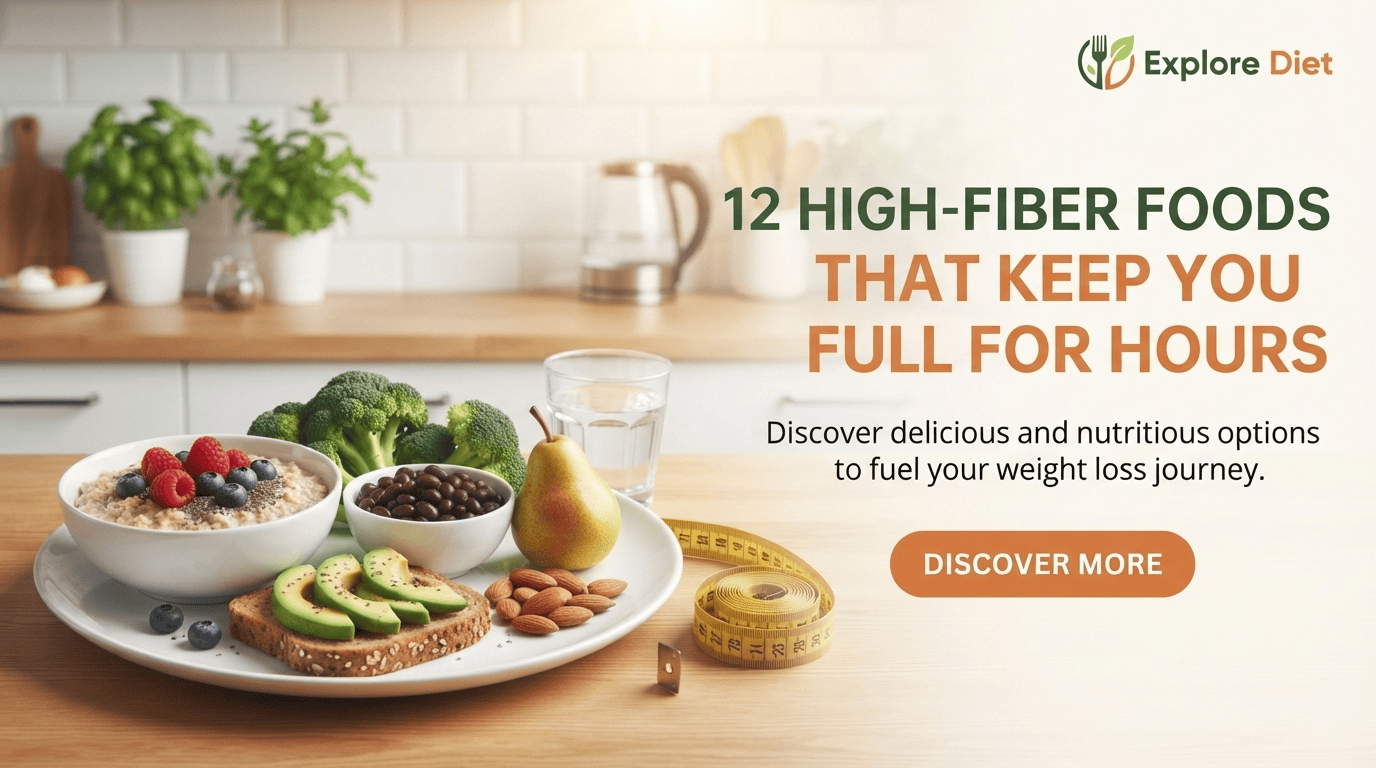
12 High-Fiber Foods That Keep You Full for Hours
If you often find yourself hungry shortly after a meal, it isn’t because you’re eating less but not eating enough.
The key to feeling full is to fuel your body with more protein. Choosing high-fiber foods that keep you full for longer is what helps you feel fulfilled.
Adding fiber to your meals helps slow digestion and supports natural appetite control. Legumes, whole grains, fruits, vegetables, nuts, and seeds are excellent sources of fiber.
While fiber isn’t a magic weight-loss ingredient, fiber for weight loss can be an effective strategy when incorporating it into a balanced diet to help manage hunger and overall calorie intake.
So, which foods are worth adding to your plate? Here are 12 filling high fiber foods that can help you build meals that actually keep hunger at bay.
Why Does Fiber Help You Feel Full?
Fiber is a type of carbohydrate found naturally in plant foods. Unlike many other carbohydrates, there are different types of fiber.
This characteristic is essential for fullness:
- Soluble fiber absorbs water, swells, and slows the movement of food through the digestive tract.
- Insoluble fiber adds bulk to stool and speeds up transit time.
Together, these mechanisms help you feel satisfied for longer. According to the Cleveland Clinic, eating enough fiber aids in appetite control and promotes long-lasting satiety.
Furthermore, many fiber-rich choices are nutrient-dense, delivering vitamins, minerals, and plant protein alongside dietary fiber.
Soluble vs. Insoluble Fiber: Quick Breakdown
- Soluble Fiber: Dissolves or swells in water. Found in oats, beans, apples, and chia seeds.
- Insoluble Fiber: Adds bulk and does not dissolve in water. Common in whole grains, vegetables, nuts, and fruit skins.
- Most high-fiber foods contain a healthy mixture of both.
Read more: The Anti-Bloating Drink That Makes Your Waist Look Smaller Fast
12 High-Fiber Foods That Keep You Full
The best foods aren’t necessarily the ones with the highest number of grams on paper. A better choice is one that fits easily into a balanced meal and provides complementary nutrients like protein or healthy fats.
1. Lentils
- Fiber Content:: 7.8–8 g per ½ cup cooked.
- Why it works: Lentils are an effortless way to add a serious amount of fiber and plant-based protein to a meal, keeping you full without heavy reliance on meat.
- How to eat: Add to soups, dals, salads, grain bowls, or curries, or combine with vegetables and brown rice.
2. Chia Seeds
- Fiber Content: 10 g per 2 tablespoons.
- Why it works: Chia seeds are one of the most concentrated fiber options available. They absorb liquid to create a gel-like texture that aids satiety.
- How to eat: Stir into oatmeal, Greek yogurt, smoothies, chia pudding, or overnight oats.
3. Raspberries
- Fiber Content: 8 g per cup.
- Why it works: Their small edible seeds and unique fruit structure provide a meaningful fiber boost alongside natural sweetness.
- How to eat: Enjoy as a snack, mix into oatmeal, or pair with plain Greek yogurt.
4. Chickpeas
- Fiber Content: 6–6.5 g per ½ cup cooked.
- Why it works: Chickpeas provide a robust mix of fiber and plant protein, making them a cornerstone for satisfying everyday meals.
- How to eat: Blend into hummus, toss into salads and soups, or roast as a crunchy snack.
5. Oats
- Fiber Content: 5.5 g per cup cooked.
- Why it works: Oats contain beta-glucan, a specialized soluble fiber known for supporting heart health and prolonged fullness.
- How to eat: Combine cooked oats with chia seeds, berries, and Greek yogurt for a balanced breakfast.
6. Avocado
- Fiber Content: 10 g in a whole medium avocado.
- Why it works: Avocado is unique because it combines high dietary fiber with heart-healthy unsaturated fats.
- How to eat: Slice over whole-grain toast, fold into eggs, or toss into grain bowls and salads.
7. Pears
- Fiber Content: 5.5 g per medium pear.
- Why it works: Pears are a convenient, portable fruit snack. Keeping the skin on maximizes your fiber intake.
- How to eat: Eat fresh with the skin on, or pair with a small serving of nuts or yogurt.
8. Black Beans
- Fiber Content: 8.5 g per ½ cup canned (no-salt-added).
- Why it works: Beans pack a powerful combination of slow-digesting carbohydrates, fiber, and plant protein.
- How to eat: Use as a base for burrito bowls, tacos, soups, and rice dishes.
9. Sweet Potatoes
- Fiber Content: 6.4 g per cup cooked.
- Why it works: Naturally filling, sweet potatoes serve as a nutrient-dense carbohydrate base for mains.
- How to eat: Roast whole, leave the edible skin on, and top with lentils, vegetables, and a protein source.
10. Brussels Sprouts
- Fiber Content: 4–6.4 g per cup cooked.
- Why it works: Roasting or steaming Brussels sprouts adds significant volume and fiber to your plate without excess calories.
- How to eat: Roast as a side dish paired with a protein and whole grain.
11. Quinoa
- Fiber Content: 5 g per cup cooked.
- Why it works: Though cooked and eaten like a grain, quinoa is technically a seed that provides both complete plant protein and fiber.
- How to eat: Use as a base for vegetable bowls, bean salads, or healthy lunch meal-prep containers.
12. Almonds
- Fiber Content: 3.5 g per 23 almonds.
- Why it works: While lower in total fiber than legumes, almonds provide a dense matrix of fiber, protein, and healthy fats that curb between-meal hunger.
- How to eat: Keep portions to a measured handful as a portable snack.
High-Fiber Foods At-a-Glance
| Food | Approx. Fiber | Simple Way to Eat It |
| Chia Seeds | 10 g / 2 tbsp | Oats or yogurt |
| Avocado | 10 g / medium | Toast or bowls |
| Black Beans | 8.5 g / ½ cup | Tacos or rice bowls |
| Lentils | 7.8–8 g / ½ cup | Soup, dal, or curry |
| Raspberries | 8 g / cup | Yogurt or oatmeal |
| Sweet Potato | 6.4 g / cup | Main meal base |
| Chickpeas | 6.2–6.5 g / ½ cup | Hummus or salad |
| Pear | 5.5 g / medium | Fresh snack |
| Oats | 5.5 g / cup cooked | Breakfast bowls |
| Quinoa | 5 g / cup cooked | Grain bowls |
| Brussels Sprouts | 4–6.4 g / cup | Roasted side dish |
| Almonds | 3.5 g / 23 almonds | Between-meal snack |
How Much Fiber Do You Need Each Day?
For most adults, 25 to 38 grams of fiber per day is the average requirement. However, it varies based on age, sex, and activity level.
If your current diet is low in fiber, you don’t need to reach this target overnight. A sustainable approach looks like this:
- Breakfast: Oats with chia seeds and berries.
- Lunch: A quinoa and chickpea salad with mixed vegetables.
- Snack: A fresh pear with a small handful of almonds.
- Dinner: Roasted sweet potato with lentils and Brussels sprouts.
How to Eat More Fiber Without Feeling Bloated
Increasing fiber too quickly can lead to gas, cramping, or digestive discomfort. Follow these expert guidelines to adjust comfortably:
- Increase Fiber Gradually: Add one high-fiber food every few days rather than overhauling your entire diet at once.
- Drink Adequate Fluids: Fiber requires water to move efficiently through your digestive tract. Drink plenty of water throughout the day.
- Choose Whole Foods First: Prioritize whole fruits, vegetables, legumes, and seeds over ultra-processed foods injected with isolated synthetic fibers.
- Keep Edible Skins On: Whenever safe and appropriate, leave the skins on fruits and vegetables for an extra fiber boost.
Read more: How Many Calories Should You Actually Eat to Lose Weight Safely
Using Fiber for Weight Loss
If you are looking into fiber for weight loss, it helps to set realistic expectations. Fiber isn’t a miracle fat-burner, but it plays a powerful role in satiety. By keeping meals satisfying, fiber makes it much easier to manage hunger, avoid energy crashes, and naturally control portion sizes.
- Less Filling Option: Sugary cereal with a sweetened drink (leads to rapid blood sugar spikes and quick hunger).
- More Filling Option: Oatmeal topped with chia seeds, raspberries, and Greek yogurt (delivers a trifecta of fiber, protein, and healthy fats).
The Best Formula for a Filling High-Fiber Meal
Don’t just chase high numbers on nutrition labels. Instead, build balanced plates using this simple formula:
3 Quick High-Fiber Meal Ideas
- Breakfast (Berry-Chia Oatmeal): Cooked oats + chia seeds + raspberries + plain Greek yogurt.
- Lunch (Chickpea Quinoa Bowl): Quinoa + chickpeas + chopped vegetables + avocado + light dressing.
- Dinner (Lentil & Sweet Potato Bowl): Roasted sweet potato + cooked lentils + Brussels sprouts + lean protein source.
FAQ
What are the best high fiber foods that keep you full?
Lentils, beans, chickpeas, chia seeds, oats, raspberries, avocado, sweet potatoes, and quinoa are among the best options. They combine fiber with protein, healthy fats, or high food volume to maximize satiety.
Does fiber for weight loss actually work?
Yes, fiber supports weight management by increasing meal satisfaction and regulating appetite. While it isn’t a standalone solution, incorporating filling high fiber foods makes it easier to maintain a calorie deficit without feeling deprived.
How much fiber should I eat daily?
Most adults should aim for 25 to 38 grams of fiber per day, depending on personal health goals, age, and caloric intake.
Can eating more fiber cause bloating?
Yes, a sudden increase in fiber intake can cause temporary bloating or gas. You can prevent this by increasing your intake slowly and drinking plenty of water.
What is a good high-fiber breakfast?
A bowl of oatmeal topped with chia seeds and raspberries, served alongside Greek yogurt for added protein, is an excellent, filling high-fiber breakfast option.
About Author

Elisa Marton
Elisa Marton is a health and nutrition writer with 5 years of experience covering diet, weight loss, and wellness. Elisa specializes in translating nutrition research into practical, sustainable guidance for readers.