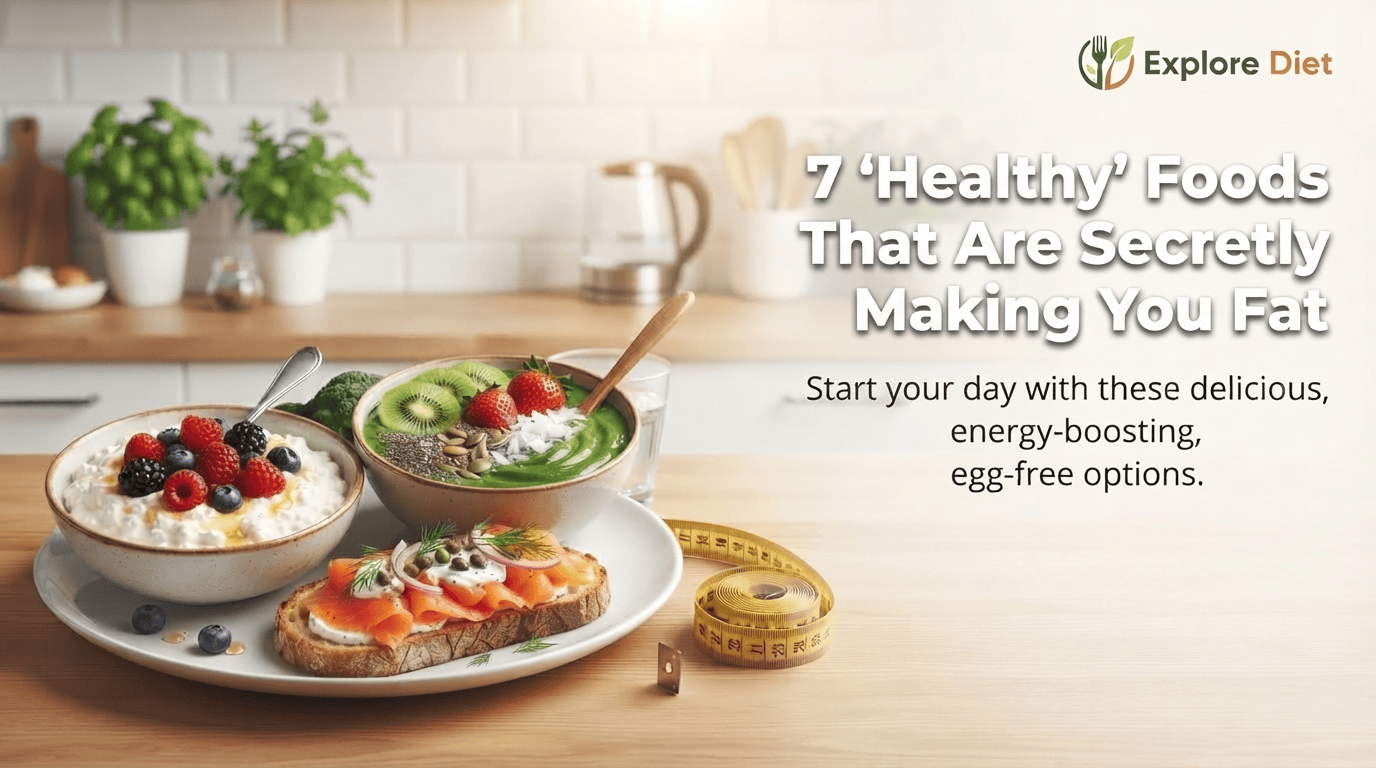
7 “Healthy” Foods That Are Secretly Making You Fat
You swapped fast food for salads, replaced afternoon candy bars with trail mix, and started every morning with an avocado smoothie. Yet, the scale isn’t moving. The numbers refuse to drop.
The problem? The food item you consider healthy aren’t.
Weight loss requires a caloric deficit. Your body burns a specific amount of energy each day, and eating fewer calories than you to tap into stored fat. While nutritious foods provide essential vitamins, minerals, and dietary fiber, nutrition and energy density. A food can be dense in nutrients while also carrying a heavy caloric load.
When you eat high calorie healthy foods without tracking exact portions, those hidden calories in healthy foods quickly erase your calorie deficit.
Here are seven healthy foods that cause weight gain when eaten without portion awareness, along with exact serving adjustments to keep your progress moving forward.
Top 7 healthy Foods That Are Secretly Making You Gain Weight
1. Store-Bought Granola
Granola is known to be the healthiest breakfast. The base ingredients, rolled oats, nuts, and seeds, are rich in fiber and minerals.
Granola is still the healthiest option,, but a a manufactured granola isn’t. To get those crunchy clusters, manufacturers combine oats with honey, maple syrup, or refined sugar, then bake them in palm oil or coconut oil.
A single cup of homemade or store-bought granola delivers roughly 500 to 565 calories and 24 grams of fat before you add milk, yogurt, or fruit.
Because granola is dry, a standard cereal bowl holds almost two cups, turning a simple breakfast into a 1,000-calorie meal.
The Quick Fix:
- Measure your serving: Treat granola as a topping rather than the main meal. Stick to a 1/4-cup serving (around 130 to 140 calories).
- Swap the base: Use plain rolled oats or puffed grain cereals as your base, then sprinkle a tablespoon of granola on top for texture.
2. Nut Butters (Almond, Peanut, and Cashew)
Nut butters offer healthy monounsaturated fats, vitamin E, and plant protein. They are also among the most concentrated calorie sources in a whole-food diet.
Two tablespoons of peanut butter or almond butter contain roughly 190 to 200 calories and 16 grams of fat.
Most people do not measure nut butter with a level measuring spoon. Dipping a dining spoon into the jar often yields a double serving, around 4 tablespoons, adding nearly 400 calories to a slice of toast or an apple slice.
1 Level Tablespoon = 95 Calories
1 Heaping “Eyeballed” Spoonful = 200 Calories
The Fix:
- Weigh your portion: Place your toast or apple on a digital kitchen scale, tare it to zero, and measure out exactly 16 grams (one tablespoon) or 32 grams (two tablespoons).
- Try powdered nut butters: Defatted peanut powders remove up to 85% of the fat content, dropping the caloric cost to around 50 calories for two tablespoons while preserving the protein and flavor.
3. Whole Avocados
Avocados are packed with fiber, potassium, and monounsaturated fats that support cardiovascular health. They are widely recommended on low-carb and Mediterranean diets.
However, dietary fat contains 9 calories per gram, compared to 4 calories per gram for protein and carbohydrates. A single medium-to-large avocado contains 240 to 320 calories and about 22 to 29 grams of fat.
Adding an entire avocado to a lunch salad, followed by avocado toast at breakfast, can add over 500 calories of fat to your daily intake.
The Fix:
- Cap your portion size: Limit your intake to 1/3 or 1/2 of an avocado per meal (about 80 to 120 calories).
- Store the remainder properly: Keep the pit in the unused portion, squeeze lemon juice over the exposed flesh, and wrap it tightly in the fridge to prevent browning.
4. Bottled Smoothies and Fruit Juices
Green smoothies and bottled fruit juices are marketed as easy ways to drink your daily produce servings.
The main issue with commercial fruit juices and smoothies is liquid calories and fast absorption. When fruit is juiced, its natural fiber matrix is broken down or completely removed. Without fiber to slow digestion, the fruit sugars hit your bloodstream quickly.
Drinking liquid calories bypasses the mechanical chewing process that signals fullness to your brain. A store-bought 16-ounce smoothie made with fruit purees, fruit juice bases, and sweetened yogurt often packs 350 to 550 calories and over 50 grams of sugar, leaving you hungry an hour later.
Standard Whole Apple: 95 Calories | High Fiber | High Satiety
16 oz Commercial Fruit Smoothie: 450 Calories | Low Fiber | Low Satiety
The Fix:
- Eat whole fruit: Choose fresh apples, berries, or oranges over juice to preserve full dietary fiber and maximize fullness.
- Build protein-first smoothies: If you make smoothies at home, use water or unsweetened almond milk as the liquid base, add a scoop of protein powder, limit fruit to one cup of frozen berries, and add spinach or cucumber for volume.
5. Olive Oil and Salad Dressings
Extra virgin olive oil is a core pillar of healthy eating, backed by research for its heart-healthy antioxidant profile.
It is also pure fat. One tablespoon of olive oil contains 120 calories.
Free-pouring oil into a cooking pan or directly onto a salad usually results in using three or four tablespoons without realizing it. A healthy meal of grilled chicken and mixed greens can jump from 350 calories to over 750 calories purely from the oil used during cooking and dressing.
The Fix:
- Measure cooking fats: Stop free-pouring from the bottle. Use a measuring spoon to track every tablespoon of oil used in cooking.
- Use an oil spray: Oil spray pumps release roughly 10 to 15 calories per spray, allowing you to coat a pan evenly with minimal fat.
- Make light dressings: Mix one teaspoon of olive oil with lemon juice, balsamic vinegar, mustard, and herbs to create flavorful dressings at a fraction of the caloric cost.
6. Dried Fruit
Dried fruits such as raisins, dried cranberries, dates, and dried mango slice. It provides vitamins and fiber in a shelf-stable format.
The challenge is volume reduction. Dehydrating fruit removes water, shrinking the physical size while leaving the calorie and sugar content intact.
Half a cup of fresh grapes contains around 50 calories and fills a small bowl. Half a cup of raisins contains roughly 250 calories and can easily be eaten in a few bites. Because dried fruit lacks water volume, it is easy to consume large amounts without feeling full.
| Fruit Type | Serving Size | Approximate Calories | Water Content |
| Fresh Grapes | 1/2 Cup | 50 Calories | High |
| Raisins (Dried Grapes) | 1/2 Cup | 250 Calories | Low |
| Fresh Plum | 1 Medium | 30 Calories | High |
| Prune (Dried Plum) | 1 Medium | 23 Calories | Low |
The Fix:
- Choose fresh or frozen fruit: Fresh fruit contains high water content that fills your stomach and keeps calorie density low.
- Use dried fruit as a garnish: Treat dried fruit like a seasoning. Sprinkle one tablespoon of dried cranberries over a salad rather than eating them by the handful.
7. Commercial Protein Bars and Energy Bites
Protein bars are convenient options when you need portable nutrition on busy days.
Many commercial protein bars are designed for endurance athletes who need fast energy. They rely on chocolate coatings, palm kernel oil, brown rice syrup, and sugar alcohols to maintain flavor and shelf life.
As a result, many protein bars carry between 250 and 400 calories, matching the caloric profile of standard candy bars while delivering only 10 to 15 grams of protein.
The Fix:
- Read nutrition labels carefully: Look for bars with under 200 calories, at least 15 grams of protein, and fewer than 5 grams of added sugar.
- Prioritize whole-food protein: Rely on whole-food options like plain Greek yogurt, hard-boiled eggs, or cottage cheese when possible.
Portion Size and Calorie Breakdown Summary
| Food Item | Typical “Eyeballed” Portion | Estimated Calories | Recommended Target Portion | Adjusted Calories | Potential Savings |
| Granola | 1 Cup | 500 kcal | 1/4 Cup | 125 kcal | 375 kcal |
| Peanut / Almond Butter | 4 Tbsp (2 scoops) | 380 kcal | 2 Tbsp (measured) | 190 kcal | 190 kcal |
| Whole Avocado | 1 Medium-Large | 280 kcal | 1/2 Medium | 120 kcal | 160 kcal |
| Bottled Smoothie | 16 oz Bottle | 420 kcal | Home Blend (Whole Fruit) | 200 kcal | 220 kcal |
| Olive Oil (Free Pour) | 3 Tbsp | 360 kcal | 1 Tbsp (or spray) | 120 kcal | 240 kcal |
| Dried Fruit (Raisins) | 1/2 Cup | 250 kcal | 2 Tbsp | 60 kcal | 190 kcal |
| Commercial Protein Bar | 1 Large Bar | 350 kcal | Targeted High-Protein Bar | 180 kcal | 170 kcal |
How to Fix a Weight Loss Plan?
If you are gaining weight while eating healthy foods, you do not need to eliminate these items completely. You simply need to bring portion sizes back into balance with your daily energy requirements.
Follow these three steps to audit your intake:
- Track everything for three days: Use a digital kitchen scale to weigh your nut butter, cooking oils, avocados, and grains for 72 hours. Eyeballing high-fat foods almost always leads to underestimating calorie intake.
- Prioritize high-volume, low-density foods: Fill half your plate with water-rich vegetables like broccoli, spinach, cucumbers, and peppers before adding dense calorie sources.
- Audit liquid fats: Measure cooking oils with a spoon or switch to an oil spray to instantly cut 200 to 400 unaccounted calories from your daily total.
FAQs
Can healthy foods cause weight gain?
Yes. Weight gain is driven by a total caloric surplus, regardless of where those calories come from. If your daily energy intake exceeds your daily energy expenditure, your body stores the excess energy as body fat, even if that energy comes entirely from whole, nutrient-dense foods.
What healthy foods can make you gain weight?
Energy-dense foods like nut butters, olive oil, granola, dried fruit, avocados, seeds, and full-fat dairy products can cause weight gain if consumed in large quantities. These items contain high calorie counts in small physical serving sizes.
Why am I gaining weight while eating healthy?
The most common cause of gaining weight while eating healthy is unmeasured portion sizes. High-fat healthy foods, cooking oils, and liquid fruit beverages add hidden calories in healthy foods that eliminate your caloric deficit.
What healthy foods should I avoid when trying to lose weight?
You do not need to avoid whole foods entirely. Instead, limit or strictly portion healthy foods high in calories like dried fruit, commercial smoothies, heavily sweetened granolas, and pre-made salad dressings high in oil.
Which healthy foods are surprisingly high in calories?
Extra virgin olive oil (120 calories per tablespoon), almond butter (190 calories per two tablespoons), store-bought granola (up to 560 calories per cup), and whole avocados (up to 320 calories each) are among the highest calorie healthy foods relative to their volume.
Wrap Up
Healthy eating and fat loss overlap, but they are not identical. Nutrients support bodily function, while total calorie intake governs your weight.
By making a few simple adjustments, weighing your nut butter, measuring your cooking oils, and choosing whole fruit over processed smoothies, you keep all the nutritional benefits of these foods without overshooting your daily calorie target.
Pick one high-calorie food from this list that you eat daily, use a measuring scale on it tomorrow morning, and see how your actual portion compares to the recommended serving size.

Plant Based Diet; Benefits and Potential Problems
What Are the Benefits of Dash Diet & Why Do Dietitians Recommend It?

15 Mouthwatering Paleo Recipes to Satisfy Your Taste Buds
About Author

Elisa Marton
Elisa Marton is a health and nutrition writer with 5 years of experience covering diet, weight loss, and wellness. Elisa specializes in translating nutrition research into practical, sustainable guidance for readers.