9 Diet Myths You Should Stop Believing in 2026
“You should chew every bite 30 times if you want to lose weight.”
Sounds familiar, right?
Diet advice can get strange very quickly. One day, carbs are being blamed for weight gain. Next, you are told to eat every two hours to keep your metabolism working. Then someone recommends a detox tea to “flush out toxins.”
The problem is not that nutrition advice changes as new research comes out. That is normal. The problem is that simple claims often spread faster than the science behind them.
Social media has made this even harder. A confident video, catchy headline, or AI generated article can make a weak nutrition claim sound like a proven fact.
So, what should you actually believe?
The best approach is to look at the bigger picture. Current guidance from organisations such as the CDC and American Heart Association focuses on overall eating patterns, adequate nutrition, physical activity, healthy weight management, and food quality rather than extreme food rules.
Here are nine common diet myths that are worth leaving behind in 2026.
Debunking 9 Common Diet Myths for Healthy Living
Myth #1: Carbs Make You Fat
Carbs have had a rough reputation for years.
Bread, rice, potatoes and even fruit have all been blamed for weight gain at some point. But carbohydrates themselves are not the problem.
Weight management is influenced by your overall energy intake, activity, food choices and many other factors. The CDC also recommends eating a variety of nutritious foods instead of cutting out an entire food group such as carbohydrates.
The type of carbohydrate matters, too.
There is a big difference between getting carbohydrates from oats, beans, lentils, fruit, and whole grains and getting most of them from sugary drinks, sweets and highly refined foods.
Foods that contain fiber can also help you feel full for longer.
What to do instead:
Do not fear carbs. Focus on better sources, reasonable portions, and an overall balanced diet.
Read More: You’ve Been Lied To: 7 Carb Myths That Are Destroying Your Diet
Myth #2: Skipping Meals Helps You Lose Weight Faster
One of the biggest weight loss myths is that skipping breakfast or lunch helps cut calories.
But it is not automatically a better weight loss strategy.
Some people prefer eating fewer meals or following a time bound eating patterns. Others feel much better eating regular meals. The important thing is whether the eating pattern is practical, nutritionally adequate, and sustainable for you.
Skipping meals can also leave some people extremely hungry later. That can make it harder to make balanced food choices.
There is no magic number of meals you need to eat each day.
What to do instead:
Choose a meal pattern that fits your routine and helps you manage hunger without feeling constantly restricted.
Myth #3: Detox Teas and Juice Remove Toxins
This is one of the most persistent nutrition myths.
Detox teas and juice cleanses are often marketed as a way to “clean” your body, improve digestion, or speed up weight loss.
But there is limited evidence supporting these claims. The National Center for Complementary and Integrative Health notes that research on detox programs is limited and that there is no compelling evidence that detox diets remove toxins or provide lasting weight management benefits.
Some detox products can also cause problems. Certain teas contain ingredients with laxative effects, while restrictive cleanses may provide too few calories and nutrients.
Your body already has organs that deal with waste and harmful substances.
What to do instead:
Support your health with the basics: eat a varied diet, drink enough fluids, get enough fiber, and sleep well.
The boring answer is often the better one.
Myth #4: Fat Free Foods Are Always Healthier
Remember when “fat free” was printed on almost everything?
The idea made sense at first. If fat contains more calories per gram than carbohydrates or protein, removing fat sounds like an obvious way to make food healthier.
But nutrition is not that simple.
A food being fat free does not automatically make it nutritious. What matters is the entire product, including its protein, fiber, added sugar, sodium, and overall ingredient list.
There is also an important distinction between different types of dietary fat. Current heart health guidance recommends replacing foods high in saturated and trans fats with foods containing healthier unsaturated fats.
What to do instead:
Do not choose a food simply because the package says “fat free.” Look at the whole nutrition label.
Myth #5: You Need to Eat Every 2 to 3 Hours for Good Metabolism
Your metabolism is not a fire that needs constant feeding.
The idea that eating every few hours keeps your metabolism permanently “revved up” has been repeated for years, but meal frequency alone is not a magic metabolism booster.
Your metabolism is influenced by several things, including your body size, age, muscle mass, physical activity and overall energy needs.
Eating every two hours is not necessary for everyone.
For some people, frequent meals work well. Others prefer three meals a day. Some may prefer a different eating schedule altogether.
What to do instead:
Build an eating routine around your hunger, schedule, nutritional needs and personal preferences.
You do not need to watch the clock every time you eat.
Myth #6: All Calories Are Exactly the Same
This one needs a little nuance.
A calorie is a unit of energy. So, from a purely mathematical point of view, 100 calories is 100 calories.
But food is more than a number.
A 100 calorie serving of nuts and a 100 calorie sugary snack may provide very different amounts of protein, fiber, vitamins and minerals. They can also affect fullness and eating behavior differently.
That is why a healthy diet cannot be judged by calories alone.
Current dietary guidance puts emphasis on overall food quality, including vegetables, fruits, whole grains, healthy protein sources and minimally processed foods.
What to do instead:
Pay attention to both quantity and quality. Calories matter for weight management, but the nutritional value of those calories matters for overall health.
Myth #7: Supplements Can Replace a Healthy Diet
A vitamin pill can be useful.
It just cannot replace a balanced diet.
Whole foods provide a combination of nutrients and other components that are difficult to reproduce with a single supplement. Supplements can have a role when someone has a confirmed deficiency, increased nutritional needs, or a healthcare professional recommends one.
The NIH Office of Dietary Supplements provides evidence based information on vitamins, minerals, herbs, and other supplements, which is a good reminder that supplements should be considered individually rather than treated as a shortcut to better health.
What to do instead:
Think of supplements as exactly what their name suggests: a supplement to your diet, not a replacement for it.
Myth #8: A Low Fat Diet Is Always Best for Your Heart
This is another idea that needs updating.
For years, “low fat” was treated as the main goal for heart health. Today, the focus is more specific: the type of fat matters.
The American Heart Association recommends limiting saturated fat and avoiding trans fats while choosing more unsaturated fats from foods such as fish, nuts, seeds, and certain plant oils.
Its 2026 dietary guidance also emphasizes the importance of looking at the overall eating pattern rather than focusing on one nutrient in isolation.
So, you do not need to be afraid of every food that contains fat.
What to do instead:
Choose healthier sources of fat more often and limit foods high in saturated and trans fats.
Read more: Can’t Afford a Cheat Day? Here Are 7 Desserts You Can Eat on a Diet
Myth #9: Weight Loss Is Simply About Willpower
This might be the most harmful weight loss myth of all.
If losing weight were only about willpower, everyone would respond to dieting in exactly the same way.
But bodies do not work like that.
Weight gain can be due to many factors. It includes stress, physical activity, food access, and health conditions, which can also affect a person’s ability to manage their weight.
That does not mean your habits do not matter.
It means weight management is more complicated than simply telling someone to “eat less and try harder.”
What to do instead:
Focus on realistic habits you can maintain. If you are struggling with weight or have a medical condition affecting your diet, consider speaking with a registered dietitian or qualified healthcare professional.
The Bigger Picture Matters More Than the Latest Diet Trend
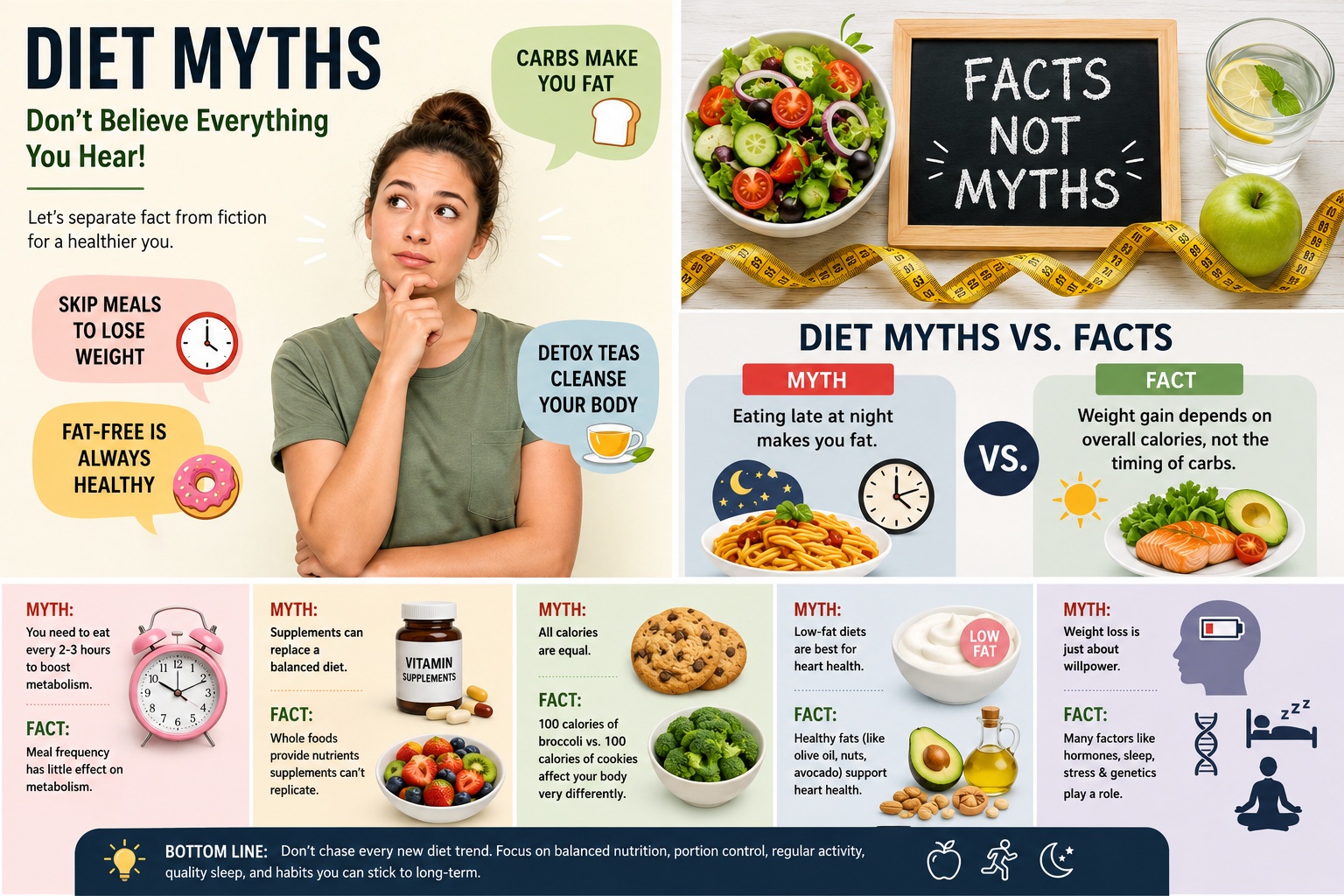
There will always be another diet rule waiting for its turn on social media.
Eat more often
Eat less often
Cut carbs
Cut fat
Drink this tea
Avoid that food
The problem is that healthy eating rarely comes down to one dramatic rule.
A more reliable approach is to focus on the basics. Eat a variety of nutritious foods. Include vegetables, fruits, whole grains, and healthy sources of protein. Choose healthier fats more often. Limit highly processed foods, added sugars, and excess sodium. Stay active and get enough sleep. These principles are also reflected in current 2026 heart health guidance from the American Heart Association.
Most importantly, be careful about where your nutrition advice comes from.
A person with a large following is not automatically a nutrition expert. A viral post is not the same thing as scientific evidence. And an article that sounds confident is not necessarily accurate.
When a diet claim sounds too good to be true, stop and ask a simple question:
“What is the evidence?”
That question can save you from wasting money, following unnecessary restrictions, and feeling guilty about food.
FAQs
Are carbs bad for weight loss?
No. Carbohydrates can be part of a healthy diet. For weight management, focus on your overall food intake and choose nutritious carbohydrate sources such as whole grains, beans, lentils, fruits, and vegetables.
Do detox teas actually remove toxins?
There is no strong evidence that commercial detox teas remove toxins from your body. Some detox and cleansing products may also have unwanted side effects.
Do I need to eat every two or three hours?
No. There is no universal meal schedule that works for everyone. Choose an eating pattern that fits your hunger, routine, and nutritional needs.
Can supplements replace whole foods?
No. Supplements can help fill certain nutritional gaps, but they should not be treated as a substitute for a varied diet. If you think you need a supplement, discuss it with a healthcare professional.
Is eating fat bad for your heart?
Not all fats are the same. Current guidance recommends limiting saturated and trans fats and choosing more unsaturated fats as part of an overall heart healthy eating pattern.
Wrapping Up
Nutrition myths are common. You can find new diet myths almost every day.
A diet that works well for one person may not be appropriate for another, especially when medical conditions, medications, allergies, or specific nutritional needs are involved.
This article is intended for general education and is based on guidance from recognized health organizations. It should not replace personalized advice from a registered dietitian, doctor, or other qualified healthcare professional.

Why Am I Always Hungry? 10 Reasons for Increased Appetite

What to Eat Before and After a Workout (With Easy Recipes)

10 Scrumptious Vegan Holiday Recipes To Spruce Up Your Dinner This Season
About Author

Elisa Marton
Elisa Marton is a health and nutrition writer with 5 years of experience covering diet, weight loss, and wellness. Elisa specializes in translating nutrition research into practical, sustainable guidance for readers.